How to Explain an Employment Gap on Your CV
A career gap is common and rarely a dealbreaker. What matters is that you account for it briefly, honestly, and without letting it dominate the page.
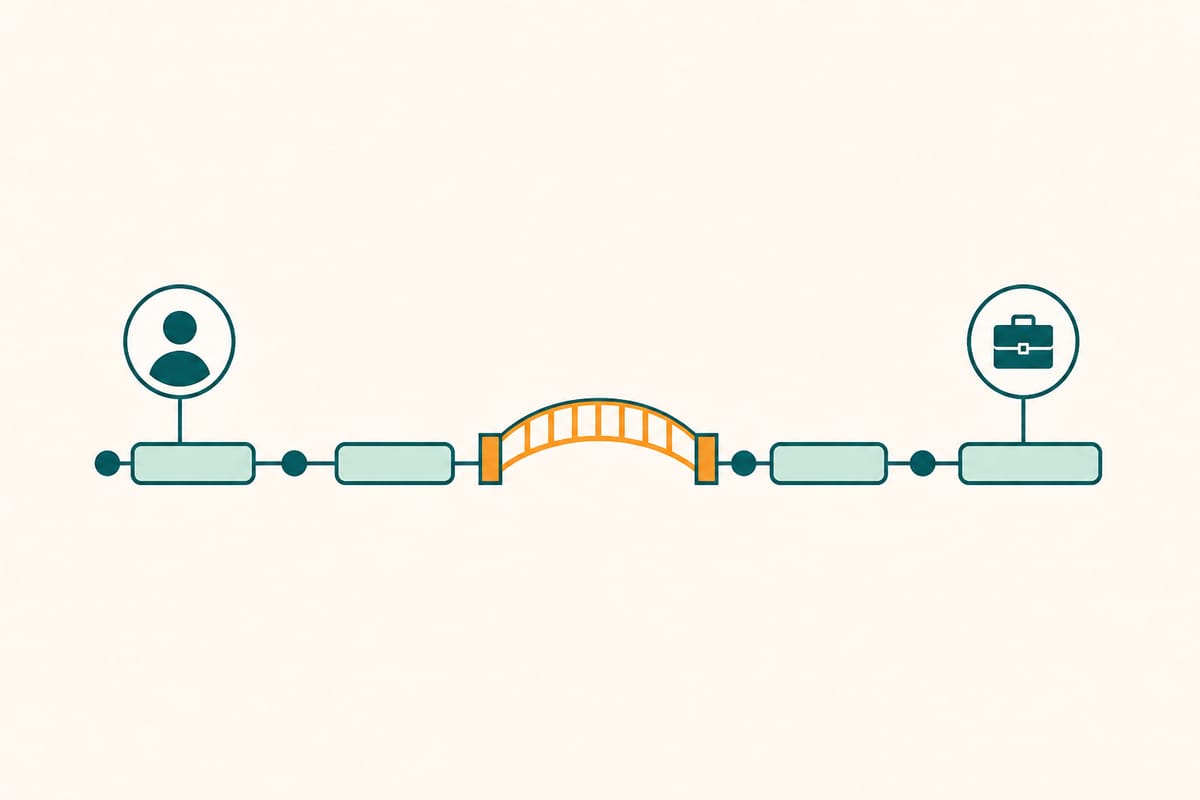
An employment gap feels heavier to the person who lived it than to the recruiter reading it. Breaks for caregiving, health, redundancy, study, and travel are common, and most hiring managers have either seen hundreds of them or taken one themselves. What turns a gap into a problem is not the time off. It is a timeline that looks hidden, or an explanation that goes on too long and sounds defensive.
This guide covers how to present a gap on the page, when to add a short reason, and how to handle the question in an interview so the focus stays on what you can do now.
How to explain an employment gap on a resume
US applications say resume; the method is the same as on a CV. Put a short dated line in the experience section that names the period and a neutral reason, then move on. Do not hide the dates, and do not write a paragraph. One line that closes the timeline is enough for the document. Save the longer story for the interview, and keep that to two sentences plus a pivot to the role.
Do not hide it, account for it
The instinct to disguise a gap is the thing to resist. Stretching dates or leaving a silent hole both create the impression you are concealing something, and dates are easy to verify. A gap that is calmly labelled is a non-event. A gap that looks hidden invites suspicion.
The cleanest approach is a brief dated entry on the CV, in the same format as your roles, that names the period and the reason in neutral terms. This closes the timeline so a recruiter is not left guessing.
A two-year break for caregiving between roles.
[Two-year gap left blank, with the previous role's end date quietly stretched to cover it.]
Career break, 2023 to 2025. Full-time family caregiving. Maintained skills through an online data analytics certificate and occasional freelance bookkeeping for two local businesses.
Keep the reason short and neutral
You control how much to share. A broad, neutral category is enough and keeps private matters private. Choose the framing that is true and comfortable.
- Caregiving, for a child, parent, or family member.
- Health, framed simply as a health matter now resolved, with no detail required.
- Study or reskilling, naming the course or qualification.
- Redundancy, which is common and understood, especially after restructures.
- A planned break, for travel or a considered pause, stated plainly.
Whatever the reason, add a forward-looking half sentence about what you did to stay current or why you are ready to return. That single detail changes the entry from a hole into a chapter.
Show what you did during the break
The strongest way to defuse a gap is evidence that you did not switch off entirely. Anything that kept a relevant skill alive is worth a line, and it can even sit in your projects or skills sections rather than only in the gap entry.
List any learning
A course, a certificate, or self-directed study in a relevant area shows initiative and keeps your skills current. Name it and the provider.
Count informal work
Freelance projects, volunteering, helping a family business, or community organising all demonstrate that you were active and reliable. Quantify where you can.
Frame transferable skills
Caregiving and running a household build organisation, budgeting, and negotiation. You do not need to overstate this, but a light, honest mention is fair.
Answer the interview question in two sentences
In an interview, the length of your answer signals how big the gap is in your own mind. Keep it to a sentence or two, then pivot to the present. Name the reason, mention anything you kept sharp, and move to why this role excites you.
Notice what the answer does not do. It does not apologise, over-explain, or dwell. It closes the topic and hands the momentum back to the role.
Point the CV forward, not at the gap
Once the gap is accounted for, the rest of the CV should pull attention toward your strengths and the role you want. That means a summary that names the target role, your most relevant experience promoted to the top, and the posting's language mirrored throughout, so the reader spends their six seconds on your fit rather than your timeline.
FitMyCV helps you steer that focus. You paste the job link, and it rewrites your summary and reorders your experience to lead with what matches the role, and it drafts a cover letter, the natural place to add a single reassuring line about a break if you want to. Your dates and history stay accurate. What changes is the emphasis. For the wider method, see our guide on tailoring a CV to a job description.
Put the focus on your fit, not the gap
Paste a job link and get a CV that leads with your most relevant experience, plus a cover letter where a brief, confident note about a break fits naturally.
The checklist
- Account for the gap with a short dated entry; never hide or disguise it.
- Use a neutral reason and add a forward-looking half sentence.
- List any learning, freelance, or volunteering that kept your skills current.
- In interviews, answer in two sentences and pivot to the role.
- Steer the rest of the CV toward your fit so the gap stops being the story.