How to Write a Cover Letter From a Job Description
A cover letter is not a summary of your CV. It is three paragraphs that answer three lines in the posting. Here is a worked letter, then the faster way to draft one.
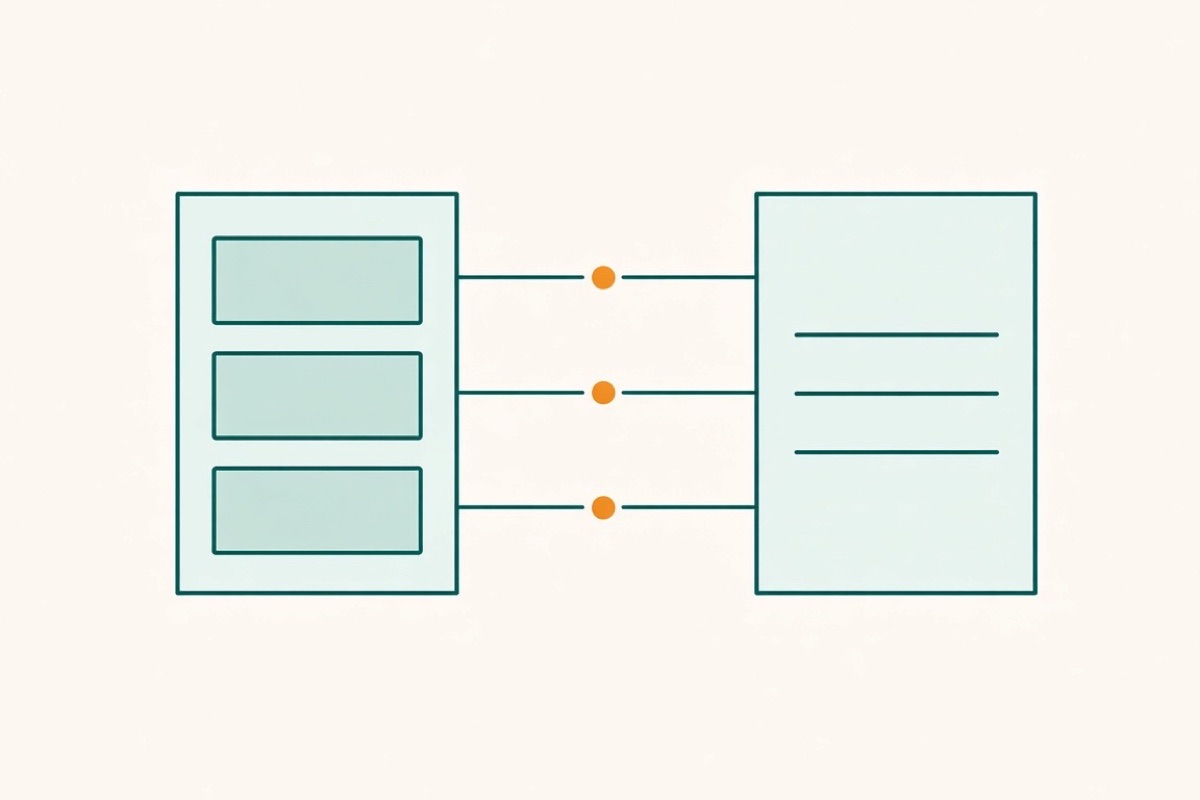
Most cover letters fail because they summarise the CV. The recruiter already has the CV. What they do not have is a short argument that this posting and this person belong together. That argument is built from the job description, not from a template.
This is how to tailor a cover letter to a job description: pick three lines from the advert, answer each with evidence from your resume, and stop. Then a note on when an AI cover letter generator from resume and job description is faster than doing it by hand.
How to tailor a cover letter to a job description
- 1Print or paste the posting and underline the title, the heaviest requirement, and the line that might count you out (a domain, a tool, a gap).
- 2Find one resume fact for each underline. If you cannot find one, that paragraph becomes honesty, not invention.
- 3Write three short paragraphs in that order. Opening names the role. Body one answers the heaviest requirement. Body two handles the second requirement or the objection.
- 4Cut any sentence that does not point at both the posting and your resume.
The posting this letter answers
Role: Customer Success Manager at a B2B SaaS company. The advert leads with reducing logo churn, onboarding enterprise accounts, and “experience in a customer-facing SaaS role”. It mentions Gainsight as a plus, not a must.
- Line 1 (title): Customer Success Manager, B2B SaaS.
- Line 2 (heaviest): Reduce churn and onboard enterprise accounts.
- Line 3 (plus): Gainsight or similar CS platform. Candidate has not used Gainsight; has used a shared health-score sheet.
The worked letter, paragraph by paragraph
Do not write “I am writing to apply”. Name the role and the one reason you fit.
I am writing to apply for the Customer Success Manager position at your company. I am a passionate professional who thrives in fast-paced environments and would be a great fit for your team.
I am applying for the Customer Success Manager role because I have spent four years onboarding enterprise accounts and cutting logo churn, most recently taking a 40-account book from 11% annual churn to 6% without adding headcount.
That opening uses the posting's words (Customer Success Manager, enterprise accounts, churn) and a resume fact with a number. Nothing else.
Go one level deeper than the CV bullet: the constraint, the decision, the result.
In my current role I am responsible for a portfolio of customers and work closely with cross-functional teams to drive success and ensure a great customer experience.
The posting weights reducing churn. My last book was 40 mid-market and enterprise logos. I introduced a 30-day onboarding checklist and a monthly health review with CS and sales; logo churn fell from 11% to 6% in four quarters, and expansion in that book covered the lost revenue.
The advert mentions Gainsight. The candidate has not used it. Do not claim it.
I am familiar with industry-leading customer success platforms and am a fast learner, excited to grow with your team.
I have not used Gainsight. I have run a shared health-score sheet and QBR pack for the same job those tools do. I can learn the product; I already do the motion your posting describes.
AI cover letter generator from resume and job description
The method above is forty minutes when you already know the story. It is longer when you are writing ten letters a week. An AI cover letter generator from resume and job description is useful only if it reads both documents. Most “generators” paste your name into a template. That is not tailoring.
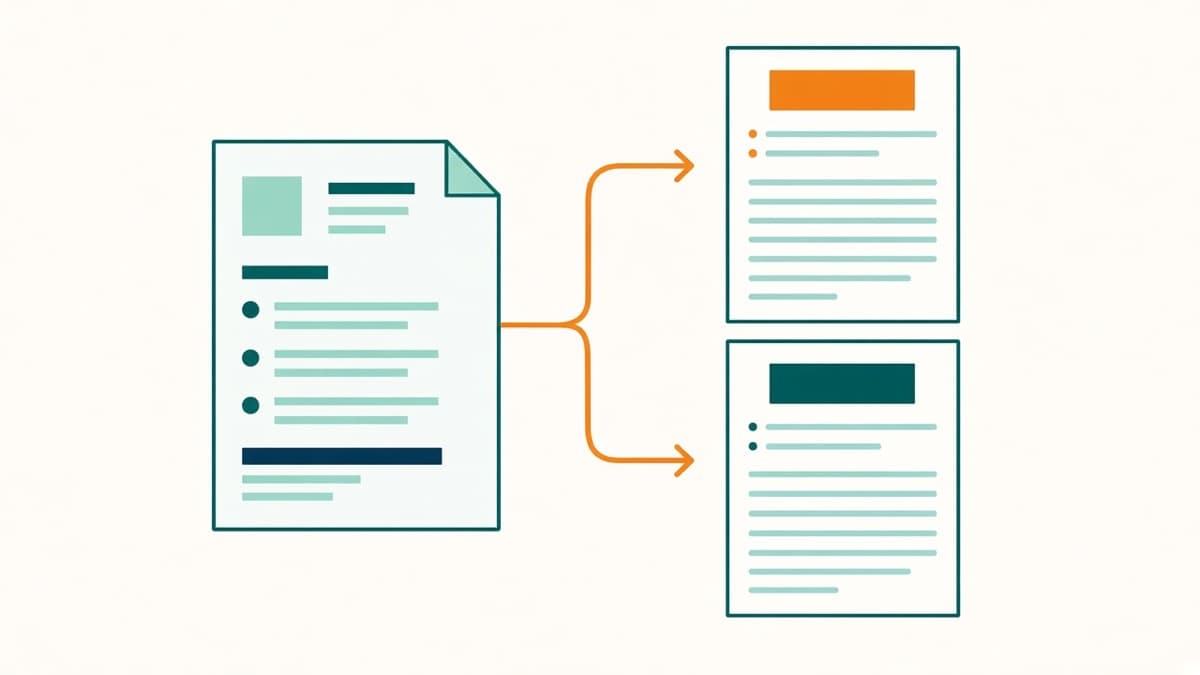
FitMyCV reads the job link, matches the posting against your uploaded CV, and drafts the three paragraphs from that overlap. Same honesty rule as above: it does not add tools or metrics you did not supply. You edit the draft, then export a PDF.
Use the generator when volume is the bottleneck. Use the worked letter when you want to control one application by hand. If you have no paid experience, the no-experience cover letter is the version of this method that starts from projects and coursework.
Draft the letter from the posting, not a template
Upload your CV once, paste the job URL, and get a cover letter that references the actual role and your actual evidence.
The checklist
- Three paragraphs. Three lines from the posting. Nothing else.
- Every sentence points at the advert and at your resume.
- Numbers stay yours. If a metric is missing, you supply it.
- Unsupported tools stay off the page, or you name the gap in one honest line.
- Edit any generated draft before you send it.