12 Tips for Tailoring a CV to Specific Jobs
Twelve tips, each with a clear yes or no. Start with the posting, change the top third, and never add what you have not done.

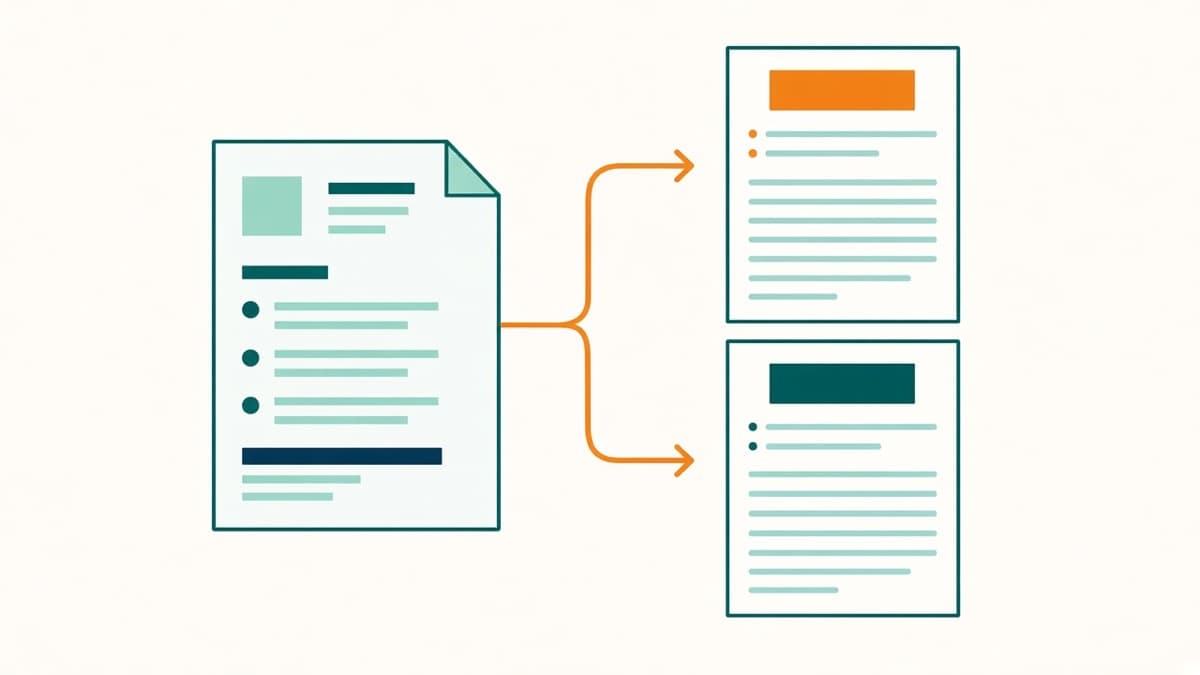
Tailoring is not rewriting your CV for every job. It is moving the right facts to the top and saying them in the employer's words. These twelve tips are the whole skill.
Before you change anything
1. Read the posting twice before you open your CV
First read for the job. Second read for the asks. Write down the five things it mentions most or lists first. That list decides every edit after it.
2. Separate must-haves from nice-to-haves
"Required", "must have" and anything in the first bullets of the requirements are must-haves. "A plus" and "desirable" are not. Spend your effort on the first group.
3. Check the gap before you write
Put your CV next to the posting in the job match checker. The missing terms it lists are your to do list. Anything not on it can stay as it is.
What to change
4. Rewrite the summary every time
Three lines: the title they are hiring for, your years, and two of their must-haves you can prove. The professional summary generator gives you three drafts from the posting.
5. Reorder before you rewrite
Move the bullets that match their asks to the top of each role. Recruiters skim, so put the match where they look first.
6. Use their word for the same thing
If they say "stakeholder management" and you wrote "worked with other teams", use theirs. Same fact, the word they will search for.
7. Put their skills first in your skills list
Same skills, new order. The ones the posting names go first. It costs ten seconds.
8. Add the result to your top bullets
"Managed a team" becomes "Led a team of 6 that cleared a two week backlog". If a bullet is near the top, it should prove something. The bullet rewriter helps with this.
See your gaps for one posting
Paste the job and your CV. Get the matched and missing terms. Free, no sign-in, nothing stored.
What to leave alone
9. Do not touch your older roles
Anything older than about ten years, your education and your contact details stay the same for every job. Tailoring is the top third of the CV.
10. Never add what you have not done
If the posting wants a tool you have never used, leave it out. A keyword you cannot talk about in an interview costs you more than a missing one.
11. Cut the clichés while you are there
"Hard-working", "team player" and "results-driven" do not match any posting. They just take space. The weak words checker finds them for you.
12. Tailor for the type of job, not the company
Five analyst roles can share one analyst CV. You only need a new version when the must-haves change. This is how tailoring stays at minutes per job instead of an hour.
The tips in one table
| Do | Do not |
|---|---|
| Read the posting twice first | Start editing your CV straight away |
| Rewrite the summary for this job | Keep one summary for every job |
| Reorder bullets by their asks | Rewrite every bullet in every role |
| Use their word for the same skill | Copy their sentences word for word |
| Add results to the top bullets | Add skills you do not have |
| Keep one version per type of job | Make a new CV for every company |
To see these tips applied to a real CV, read how to tailor a resume for a specific job. For the full step by step method, read how to tailor your CV to a job description.
Let FitMyCV do the top third
Paste a job link. FitMyCV rewrites your summary and top bullets for that posting from your own CV, and writes the cover letter.